Pool Renovation in Orlando, FL: 7 Upgrades That Add Real Value
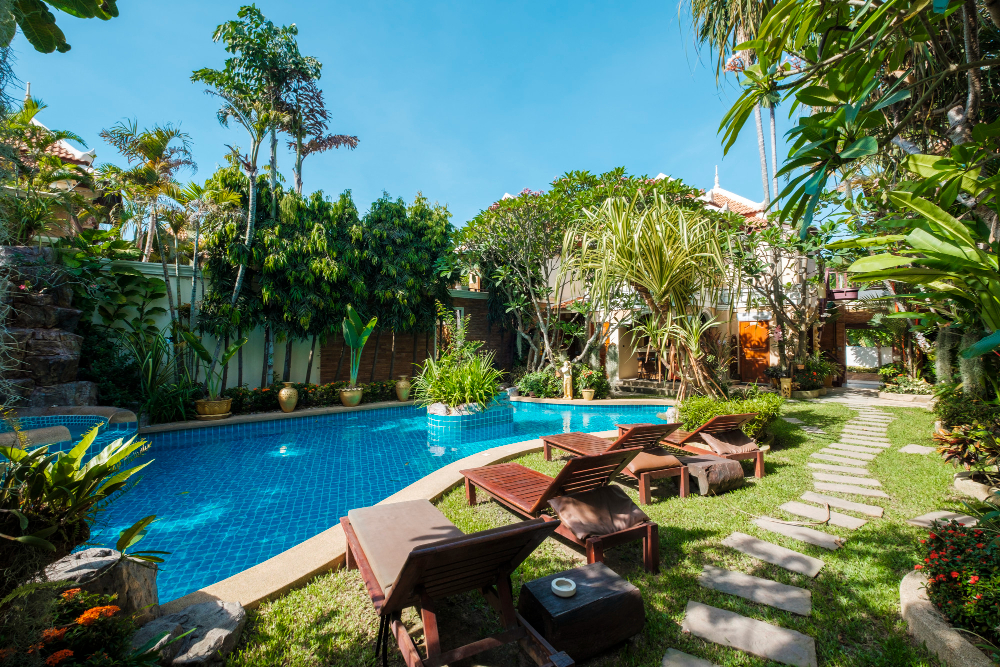
Living in Central Florida means your pool is likely the most used "room" in your house, especially from March through November. But if your pool was built in the early 2000s—common in established neighborhoods like Dr. Phillips or Hunter's Creek—it might look tired or cost too much to run. At All Phase Pool Remodeling, we help homeowners update their pools to withstand our harsh UV rays and sandy soil while boosting property value.
Is Pool Renovation in Orlando Worth the Investment?
In Orlando, a modernized pool typically returns 50% to 80% of its cost upon resale, significantly higher than the national average. Homebuyers in areas like Lake Nona and Winter Park expect move-in-ready outdoor spaces that don't require immediate repairs. Beyond resale value, upgrading your pool reduces monthly energy bills and maintenance time, which is critical given our 90-degree summers.
For homeowners planning to stay put, the value comes from usability. We often see pools in College Park or Conway that are structurally sound but functionally obsolete. By updating the equipment and aesthetics, you transform a money pit into a low-maintenance asset.
Here are seven specific upgrades that offer the best return on investment for Florida homes.
1. Is Pebble Tec Worth the Extra Cost?
Pebble finishes typically cost 25% to 35% more than standard white plaster (Marcite), but they last 20+ years compared to the 7-10 year lifespan of Marcite. In Florida, where chemical imbalances from heavy rain and intense sun attack pool surfaces, pebble finishes are far more durable. They resist staining, fight off algae adhesion, and maintain their color despite years of UV exposure.
Why This Matters in Central Florida
Standard Marcite is soft and porous. In Orlando, we get about 52 inches of rain a year, which constantly messes with your water chemistry. When your pH fluctuates, the water can eat away at Marcite, leading to rough spots that scrape your feet—what we call "pool toe."
A pebble finish uses small aggregates mixed with cement. This creates a harder, non-porous surface. We often recommend this for homes in older neighborhoods like Maitland where trees drop tannins (leaves/acorns) into the pool. A white plaster pool stains immediately; a darker pebble finish hides those imperfections and resists the chemical reaction.
Cost Estimate: Resurfacing an average 15x30 pool with a pebble finish usually lands between $6,000 and $9,000, depending on the tier of stone you choose.
2. Should You Switch to a Saltwater System?
Switching to salt water pays for itself in roughly 2 to 3 years by eliminating the need to buy buckets of chlorine tablets. A salt cell generator converts dissolved salt into pure chlorine, keeping the water sanitized without the harsh chemical spikes. For an Orlando pool open year-round, this saves you about $300-$500 annually on chemicals.
The Comfort Factor
The biggest difference isn't the money; it's the feel. If you have kids swimming daily during summer break, you know the red eyes and itchy skin that come with traditional chlorine pools. Saltwater feels softer on the skin (it’s about 1/10th the salinity of the ocean) and doesn't fade swimsuits as quickly.
Maintenance Reality Check:
Salt cells do need cleaning. In hard water areas like Oviedo or Winter Springs, calcium buildup on the salt cell plates happens faster. You'll need to clean the cell with a mild acid solution every 3 months to keep it working.
Cost Estimate: Converting an existing system typically costs between $1,500 and $2,500 for the equipment and installation.
3. How Much Can LED Lighting Save You?
LED pool lights use 75% to 80% less energy than old-school incandescent bulbs and last 30,000+ hours. While a traditional 500-watt bulb drives up your OUC or Duke Energy bill, a comparable LED uses only 30-50 watts. If you run your lights every evening for ambiance, this switch saves significantly over the life of the pool.
Safety and Aesthetics
In Florida, the sun sets around 8:30 PM in the summer, but we often swim well past dark. Old incandescent lights are often dim and yellow. LEDs provide crisp, bright light that reaches the deep end, making it safer to spot swimmers.
Plus, modern LEDs offer color-changing options. We recently installed a system in a Baldwin Park home where the owners can change the pool color to blue, green, or even purple for game days. It’s a simple upgrade that completely changes the look of the backyard at night.
Cost Estimate: Expect to pay $500 to $900 per light fixture installed.
4. Are Smart Pool Controls Really Necessary?
Smart automation is essential for Orlando homeowners who travel or manage short-term rentals near the theme parks. These systems allow you to control your pump, heater, lights, and water features from a smartphone app. You can schedule your pump to run during off-peak electrical hours, saving money without lifting a finger.
The "Storm Prep" Advantage
Here is a scenario we see every hurricane season: You are out of town, and a storm is tracking toward Orange County. With a smart system, you can check your water level (if you have an autofill/drain sensor) or turn off the equipment remotely to prevent electrical damage from power surges.
It also takes the guesswork out of chemical management. Higher-end systems monitor pH and ORP (sanitization) levels and dose the pool automatically. If you're tired of walking out to the pad to flip valves every time you want to use the spa, automation is the answer.
Cost Estimate: Basic automation starts around $1,800, while fully fully integrated systems controlling spa, lights, and heater can run $3,000 to $5,000.
5. Do Water Features Increase Home Value?
Water features like sheer descents, deck jets, or bubbling fountains add visual value and auditory privacy, making your home stand out to buyers. In dense neighborhoods like Celebration or Laureate Park where houses are close together, the sound of falling water masks traffic noise and conversations from next door.
Cooling the Pool
Here is a trick many people don't know: running a sheer descent or fountain at night can help cool your pool water. By aerating the water and exposing more surface area to the night air, you can drop the pool temperature by a few degrees. In August, when pool water feels like bathwater (often hitting 90°F+), this is a massive benefit.
However, be mindful of evaporation. Running features constantly will increase water loss, so we usually program them to run only when you're home to enjoy them.
Cost Estimate: Adding simple deck jets can start at $1,000 during a renovation, while adding a rock waterfall or sheer descent wall can range from $2,500 to $10,000+.
6. What is the Best Decking Material for Florida Heat?
Travertine pavers are the superior choice for Florida pool decks because they stay 20% to 30% cooler than concrete or brick. Being a natural stone, travertine reflects sunlight and absorbs cool ground temperatures, saving your feet from burns during our scorching July afternoons. It is also non-slip when wet, which is crucial for safety.
The Problem with Concrete in Florida
Standard concrete decks often crack in Central Florida. Our soil is sandy and shifts easily, especially after heavy tropical storms soak the ground. Concrete is rigid and snaps when the ground moves.
Pavers (whether travertine or concrete) are "segmental," meaning they float on a bed of sand. If the ground shifts or a tree root from a nearby oak pushes up, you can simply lift the pavers, relevel the sand, and put them back. You don't have to jackhammer the whole deck.
Cost Estimate:
- Acrylic Spray Deck (Cool Deck): $6 - $10 per sq. ft. (Good budget option, but requires recoating every 5-7 years).
- Concrete Pavers: $10 - $15 per sq. ft.
- Travertine: $15 - $25 per sq. ft.
7. Screen vs. Glass: Which Enclosure is Best?
For 90% of Orlando homeowners, a high-quality screen enclosure is the best investment to keep out mosquitoes, palmetto bugs, and debris. While glass walls offer unobstructed views, they act like a greenhouse, trapping heat and requiring constant cleaning to remove condensation and hard water spots.
Upgrading Your Screen
If your enclosure was built before 2010, you likely have standard 18/14 mesh. We recommend upgrading to 20/20 mesh (often called "No-See-Um" screen). It’s tightly woven to stop those tiny biting midges common near lakes in Windermere or Clermont.
We also see a trend toward "picture window" screens. This removes the vertical aluminum bars on the back wall of the cage, giving you a wide-open view of the golf course or conservation area while still keeping the bugs out.
Cost Estimate:
- Rescreening: $2,500 - $4,500 depending on cage size.
- Picture Window conversion: $3,000 - $5,000 per section.
- New Screen Enclosure: $12,000 - $25,000+.
When to Call All Phase Pool Remodeling
Renovating a pool is a construction project, and in Orlando, you need a licensed contractor who understands local building codes. Orange County has specific requirements for drains (VGB Act compliant), fencing, and electrical bonding that must be met during any major renovation.
If your pool surface feels like sandpaper, your tiles are falling off, or your equipment screams when you turn it on, it’s time to act. We recommend starting the planning process in late fall or winter. This gets your pool ready for the first swim of spring without the stress of the summer rush.
We handle everything from simple resurfacing to complete backyard transformations. We know the specific challenges of Florida backyards—from high water tables to relentless sun—and we use materials proven to last in this climate.
Ready to transform your backyard? Contact All Phase Pool Remodeling today for a consultation on your pool renovation in Orlando, FL.