Pool Cracks in Orlando: Surface Crazing vs. Structural Damage
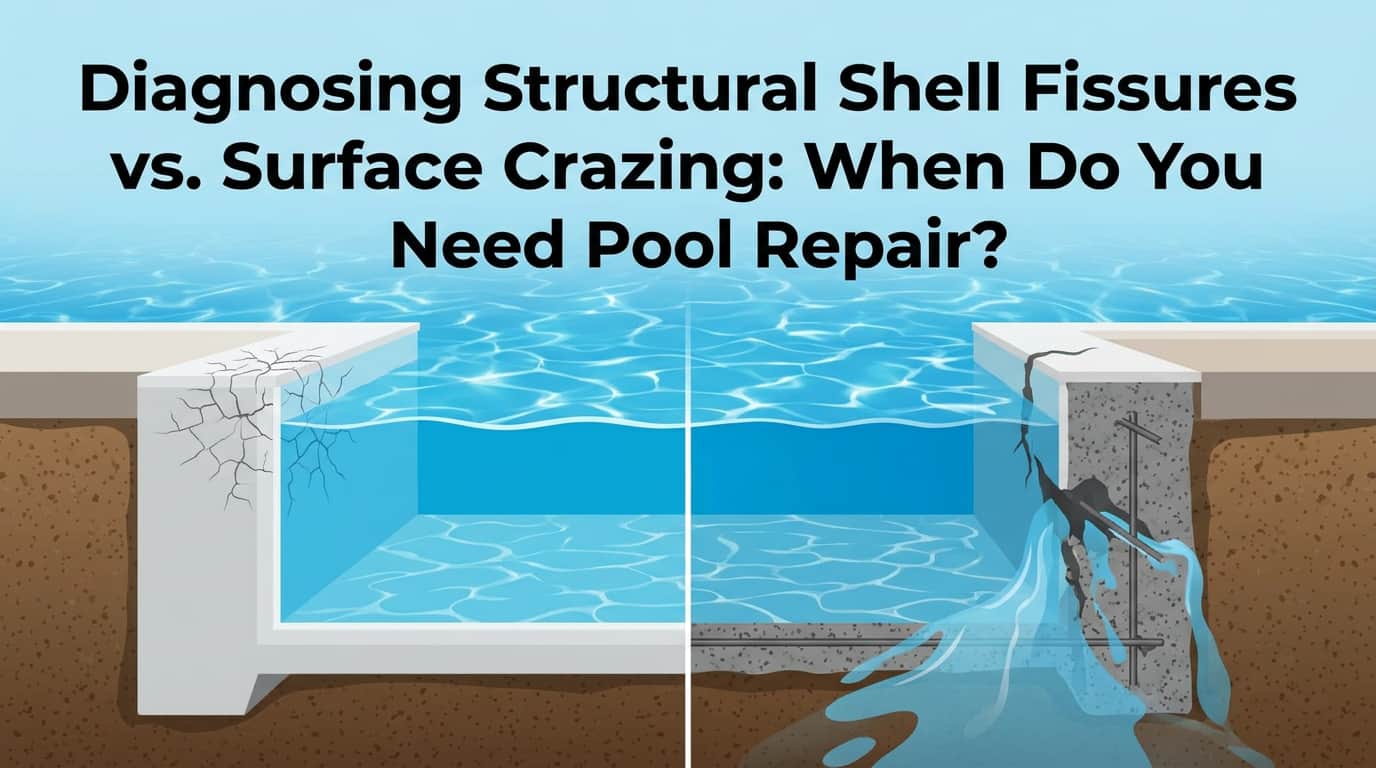
Finding a crack in your Orlando pool can send your heart racing. But not every crack means disaster. Some are purely cosmetic. Others signal a structural failure that can cost $10,000 or more to fix if left unaddressed. Knowing the difference protects both your pool and your home's foundation.
If you're staring at a crack right now and aren't sure what you're dealing with, contact All Phase Pool Remodeling, Inc at (888) 714-7665 for a free professional assessment.
What Is Surface Crazing, and Should You Worry?
Surface crazing is a network of fine, shallow cracks in your pool's plaster that don't penetrate the concrete shell beneath. They look like a spiderweb or the surface of an old ceramic mug. They don't leak. They don't move. They're a cosmetic problem, not a structural one.
Florida's intense heat plays a direct role here. When plaster cures too quickly under the summer sun, or when water chemistry runs slightly acidic over many seasons, the surface layer shrinks and develops these hairline fractures. Pools throughout Dr. Phillips and Celebration see this regularly, especially on surfaces that are 7 to 12 years old.
Crazing doesn't threaten your shell. It does, however, create a rough texture that irritates skin and harbors algae. Once the plaster surface starts to craze noticeably, pool resurfacing is typically the right fix. Costs for replastering start around $5,000 for a standard residential pool, while premium Pebble Tec finishes run $9,000 to $18,000 depending on pool size.
How Do You Identify a Structural Shell Fissure?
A structural shell fissure goes all the way through the concrete shell. These cracks are deeper, wider (often more than 1/16 of an inch), and may run in a straight or jagged line rather than a web pattern. You might notice the crack on the pool floor or wall has a raised edge on one side, meaning the two sections of shell have shifted relative to each other.
In Central Florida, the soil moves. Sandy soil, the kind found across much of Orlando and beneath neighborhoods like Lake Nona and Windermere, doesn't hold moisture evenly. During dry spells, the ground contracts beneath your pool. Heavy rains saturate it again. Over years, this cycle creates hydrostatic pressure and soil shifting that can crack even a well-built shell.
Tree roots are another common culprit. A mature oak near the pool deck in an older Winter Park backyard can exert enough pressure to fracture the shell over time.
These aren't cosmetic issues. A true structural crack can cause your pool to lose 1 to 2 inches of water per day, undermining the surrounding soil and potentially compromising your deck and home foundation.
Does My Pool Have a Leak? The Bucket Test Explained
The bucket test is the simplest way to determine whether a crack is actively leaking before calling a professional.
Fill a 5-gallon bucket with pool water and set it on the first or second step of your pool. Mark the water level inside the bucket and on the pool wall with a piece of tape or a grease pencil. Leave the pump running normally. After 24 hours, compare the two levels.
Here's how to read the results:
- Equal drop in both: Normal evaporation. No active leak detected.
- Pool dropped more than the bucket: Your pool is likely losing water through a crack or plumbing.
- Pool dropped significantly more (more than 1/4 inch in 24 hours): You have an active leak that needs professional diagnosis immediately.
Repeat the test with the pump off for another 24 hours. If the pool loses more water with the pump running, the leak may be in the plumbing or equipment. If it loses more with the pump off, the shell itself is the likely source.
This test works well for confirming a leak exists, but it won't tell you where the crack is located or how deep it runs. That requires an in-person inspection.
What Are the Warning Signs That Require Immediate Pool Repair in Orlando, Florida?
Some cracks demand urgent attention. In our experience serving pool owners across Central Florida since 1993, these are the signs that you shouldn't wait on:
Call a professional right away if you notice:
- A crack wider than 1/4 inch, or one where the edges sit at different heights
- Water loss greater than 2 inches per week (after confirming it's not evaporation)
- Soft, wet, or sunken ground around the pool deck or equipment pad
- Deck sections that have shifted, lifted, or cracked directly adjacent to the pool wall
- A crack that visibly grows or changes over a period of weeks
- Any crack accompanied by staining that bleeds out onto the surrounding deck
Structural failures get worse with time, not better. Florida's rainy season (June through September) adds additional hydrostatic pressure to an already compromised shell. A crack that's manageable in April can become a major excavation project by August if ignored.
When structural damage is confirmed, repairs typically involve epoxy injection, carbon fiber staples, or hydraulic cement depending on the severity. Repairing structural cracks is mandatory before any pool resurfacing or pool renovation work can begin. Skipping that step just buries the problem under a new finish.
What Does Pool Crack Repair Cost in Orlando, Florida?
Costs vary depending on what you're dealing with. Here's a general breakdown for pool repair in Orlando, Florida:
- Surface crazing repair (replastering): $5,000 to $10,000 for standard plaster; $9,000 to $18,000+ for Pebble Tec
- Minor structural crack repair (epoxy injection or staples): $1,000 to $3,500 depending on crack length and accessibility
- Moderate structural repair with resurfacing: $8,000 to $20,000
- Major structural failure (full shell repair, excavation possible): $15,000 to $40,000+
Catching a structural crack early is the difference between a $2,000 repair and a $20,000 project. The longer water escapes through a fissure, the more it erodes the surrounding soil and the more extensive the repair becomes.
Protecting Your Pool for the Long Haul
Florida pools face conditions that pools in cooler, drier climates simply don't. The combination of year-round use, intense UV exposure, dramatic wet and dry cycles, and sandy shifting soil means your pool needs more attention than the manufacturer's warranty suggests.
A few habits that reduce your risk of serious cracking:
- Test and balance your water chemistry every 1 to 2 weeks. Aggressive water (low pH, low calcium hardness) slowly eats away at plaster from the inside out.
- Keep your pool full. Draining a Florida pool without taking the proper steps first risks "pop-out," where hydrostatic pressure lifts the shell right out of the ground.
- Inspect the waterline and pool floor visually at least once a month. Small cracks found early are cheap to fix.
- Schedule a professional inspection every 3 to 5 years, or immediately after any significant ground movement or nearby construction.
Ready to Get Your Pool Checked?
A crack in your pool doesn't always mean a worst-case scenario. But you won't know what you're dealing with until someone who's seen thousands of these looks at it in person.
All Phase Pool Remodeling, Inc. has been diagnosing and repairing pool cracks across Central Florida since 1993. Our team handles everything from minor surface repairs to full structural restorations and complete pool renovations, with no subcontractors on resurfacing work. Call (888) 714-7665 or request your free estimate online today.