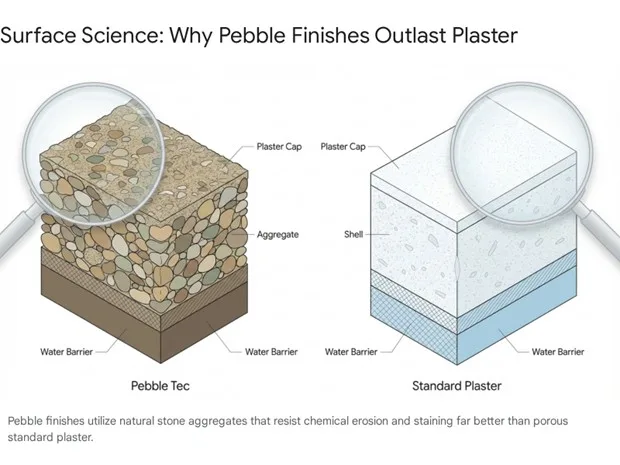
Florida pool owners face a choice that really matters: Pebble Tec or traditional plaster? For Jacksonville homeowners dealing with 90°F+ summers and near-constant pool use, Pebble Tec holds up significantly better. Plaster typically lasts 5-10 years in Florida's climate, while Pebble Tec can last 20+ years. That gap adds up fast when you factor in resurfacing costs.
Not sure which finish is right for your pool? All Phase Pool Remodeling, Inc. has been helping Florida homeowners make this exact decision since 1993. Call (888) 714-7665 for a free estimate.
What's the Difference Between Plaster and Pebble Tec?
Traditional plaster (also called marcite) is a mixture of white cement and marble dust. It's been the standard pool finish for decades. Smooth to the touch, affordable, and quick to apply, it's the go-to option for homeowners watching their budget. Costs typically run $5,000 to $10,000 for a standard residential pool in Florida.
Pebble Tec is a different category of finish. Small natural river pebbles are mixed with cement and pneumatically applied to the pool shell. The result is a dense, textured surface that handles chemical imbalances, algae growth, and UV exposure far better than plaster. Pricing starts around $9,000 and can reach $18,000 or more for larger pools or premium finishes like PebbleFina.
Both options are available through our pool resurfacing services, and both can dramatically improve the look and feel of an aging pool.
How Does Florida's Humidity Affect Pool Finishes?
Florida's climate puts pool finishes under pressure that homeowners in other states simply don't deal with. Jacksonville's summers bring consistent 85-95°F temperatures with humidity levels hovering between 70-80%. Pools run almost year-round here, which means the finish never really gets a rest.
Plaster is particularly vulnerable in these conditions. The surface is porous, which makes it susceptible to algae taking hold. Chemical imbalances, which happen more frequently when a pool runs constantly, can cause plaster to erode, stain, and develop a rough texture within just a few years. We've seen plaster finishes in Jacksonville neighborhoods like Riverside and San Marco deteriorate noticeably in as little as five years due to the combination of heat, chemical use, and hard water conditions.
Pebble Tec's aggregate density changes the equation. The dense pebble surface resists chemical erosion and doesn't provide the same foothold for algae that plaster does. That's a big reason why neutral pebble finishes have been replacing blue tile and traditional plaster in pool remodeling Jacksonville, Florida projects over the past decade.
Does Pebble Tec Actually Look Better?
For coastal and subtropical homes, yes. Pebble finishes create a natural, resort-style appearance that flat white plaster simply can't match. The textured surface catches light differently throughout the day, and the color runs throughout the material, so chips and wear don't show as stark white patches the way they do with plaster.
Plaster does offer a clean, classic look when it's new. But within a few years in Florida, that bright white finish can develop gray streaks, mineral staining, and rough patches. In higher-end Jacksonville neighborhoods like Ponte Vedra Beach or San Jose, a worn plaster finish can actually detract from a home's curb appeal.
Pebble Tec comes in dozens of color options and aggregate sizes. PebbleFina uses smaller stones for a smoother feel underfoot, while PebbleSheen offers a mid-range texture that balances durability with comfort. For families with young children, the difference in texture is worth considering.
What Are the Real Maintenance Differences?
Plaster requires more careful water chemistry management. When pH or calcium levels drift out of range, etching and staining happen fast. A typical Florida homeowner with a plaster pool should expect to resurface every 7-10 years, sometimes sooner with heavy use or chemistry issues.
Pebble Tec is more forgiving. Minor chemical fluctuations won't etch the surface the way they damage plaster. Routine brushing and standard water chemistry maintenance are all it takes to keep a pebble finish looking good for 15-20+ years.
That said, no finish is maintenance-free in a Florida summer. Algae can still grow on pebble surfaces if water chemistry is neglected for extended periods. Our team at All Phase Pool Remodeling, Inc. always walks homeowners through proper startup chemistry after a pool renovation, because the first 30 days after resurfacing set the tone for long-term performance.
Is Pebble Tec Worth the Extra Cost in Jacksonville?
Here's the honest breakdown. Plaster costs $5,000 to $10,000 and lasts 5-10 years in Florida conditions. Pebble Tec runs $9,000 to $18,000 and lasts 15-20+ years. If you resurface a plaster pool twice in 20 years, you're potentially spending $10,000 to $20,000 total, plus the inconvenience of being out of your pool for 7-14 days each time.
A single Pebble Tec installation covers that same 20-year window with one project and one period of downtime. For homeowners planning to stay in their home long-term, the math generally favors Pebble Tec. For those planning to sell within the next few years, a quality plaster resurface may be the more practical choice.
Pool remodeling in Jacksonville, Florida has also shifted toward Pebble Tec for resale value reasons. Buyers in Northeast Florida recognize the finish and understand what it signals about a well-maintained pool.
Ready to Resurface Your Pool?
If your pool is showing stains, rough texture, or visible cracks, now is the right time to decide. Fall and early winter are the best seasons to schedule a resurface in Florida, since cooler temperatures help the finish cure properly.
All Phase Pool Remodeling, Inc. has completed thousands of pool resurfacing and renovation projects across Jacksonville, Orlando, and Central Florida since 1993. We're PTI-certified Pebble Tec applicators with in-house crews, meaning no subcontractors touch your pool. Call us at (888) 714-7665 or request a free estimate online to get started.