Modern Pool Finishes in Jacksonville, FL: Why They Last Longer
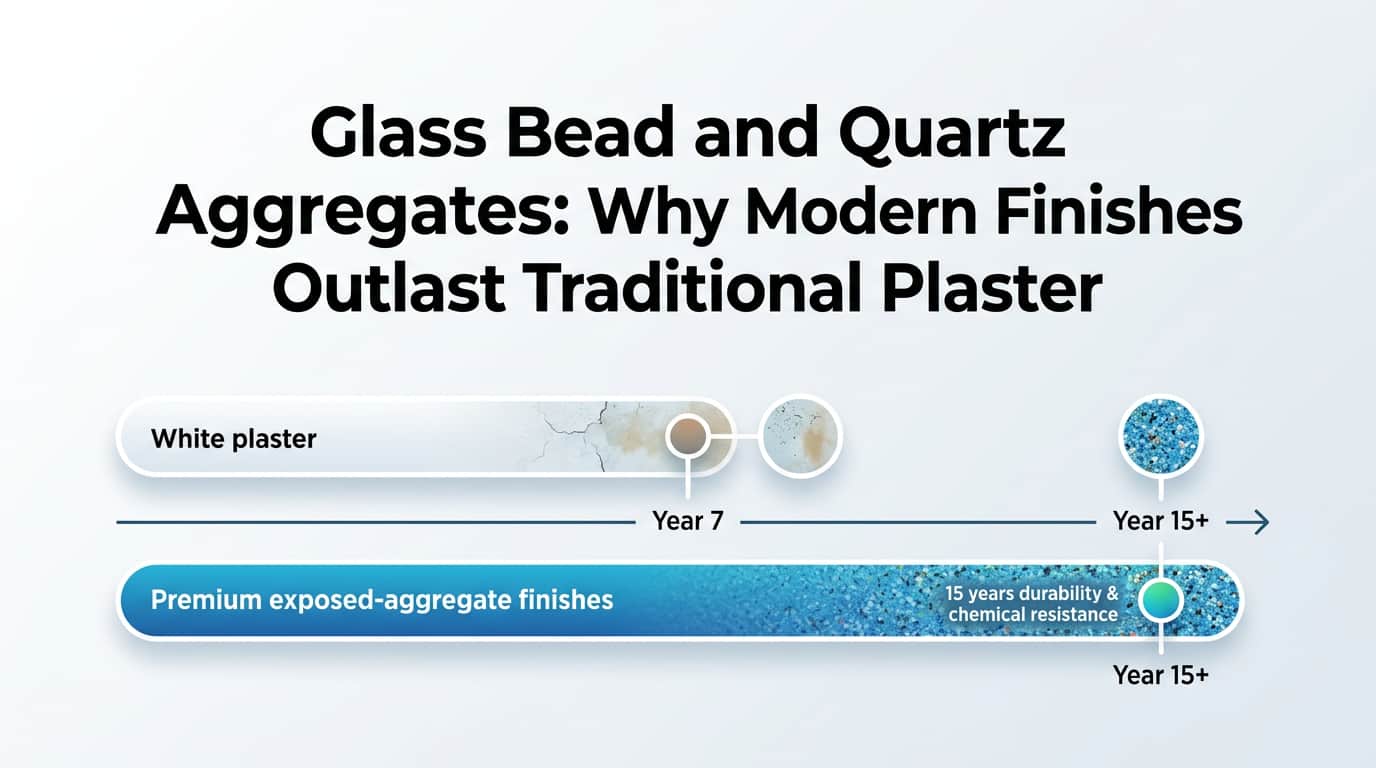
If your Jacksonville pool surface feels like sandpaper underfoot, looks dull and stained, or has started showing cracks and discoloration, standard plaster has likely reached the end of its useful life. Traditional marcite plaster typically lasts just 5-10 years in Florida's climate. Modern quartz and glass bead aggregates last 15-20 years. That difference adds up to thousands of dollars saved on resurfacing costs alone. Contact All Phase Pool Remodeling, Inc at (888) 714-7665 to find out which finish makes the most sense for your pool.
Across Northeast Florida, homeowners near Ponte Vedra Beach, St. Johns County, and the historic Riverside neighborhood are making the switch to high-performance finishes. The reason is simple: Florida's heat, humidity, and pool chemistry demand more than traditional plaster can reliably deliver.
Why Does Traditional Plaster Fail Faster in Florida?
Standard marcite plaster breaks down faster in Florida than virtually anywhere else in the country. The combination of intense UV exposure, heavy summer rainfall, high bather loads, and aggressive pool chemistry creates conditions that eat through plaster at an accelerated rate.
Plaster is a porous material made primarily from white cement and marble dust. When your pool's pH dips even slightly below 7.2, the water begins pulling calcium out of the surface through a process called chemical erosion. In Florida's warm water temperatures, that reaction happens faster. Many Jacksonville pool owners find their plaster surface roughening within 4-6 years, well before the expected 7-10 year lifespan. By the time the surface starts snagging swimsuits and irritating skin, the structural integrity of the finish has already been compromised.
Quartz and glass bead aggregates resist this process far more effectively. Quartz crystals are chemically inert, meaning pool water has far less ability to erode the surface. Glass bead finishes share similar resistance, with the added benefit of a smoother, non-porous surface that gives bacteria and algae fewer places to anchor.
How Do Quartz and Glass Bead Finishes Hold Up to Florida's Climate?
Quartz aggregate finishes, like Diamond Brite, maintain their surface integrity through Florida's full range of weather conditions. They withstand the 90°F+ summers, the daily afternoon thunderstorms common along Florida's First Coast, and the seasonal pH swings that challenge even well-maintained pools.
Glass bead finishes go a step further. The tiny glass spheres are non-reactive and extremely dense. Where plaster develops micro-pits over time that trap staining agents and algae, glass bead surfaces stay smoother for longer, making routine cleaning faster and chemical treatments more effective. Our crews have applied both finishes on pools throughout Jacksonville, and the difference in surface condition at the 8-10 year mark is substantial. Plaster pools in that age range are often rough, discolored, and beginning to show delamination. Quartz and glass bead pools from the same era routinely still look clean and feel comfortable underfoot.
Lifespan comparison:
- Standard plaster (marcite): 5-10 years
- Quartz aggregate: 10-15 years
- Glass bead finishes: 15-20 years
Do Modern Finishes Keep Their Color Longer?
One of the most common frustrations we hear from Jacksonville homeowners is that their pool's color has faded or turned an uneven yellowish-gray within a few years. That's a plaster problem.
Traditional white plaster absorbs minerals, iron from well water, and organic staining from leaves and algae. Once the staining is embedded in the porous surface, removing it without acid washing becomes nearly impossible. Repeated acid washing accelerates surface erosion, creating a cycle that shortens the finish's life even further.
Quartz aggregates are manufactured with color mixed throughout the material, not just on the surface. UV exposure doesn't bleach the color the same way it does on plaster because the pigment runs all the way through each crystal. Glass bead finishes reflect and refract light rather than absorbing it, which is why a glass bead pool keeps that brilliant, almost luminescent quality for years after installation.
Both options are available in a wide range of colors that complement Jacksonville's coastal aesthetic, from deep ocean blues and soft aquamarines to warm tropical tones. If you've been hesitant to invest in a resurfacing because you're afraid of ending up back in the same situation in five years, a quartz or glass bead finish directly addresses that concern.
What Makes Jacksonville's Climate Especially Hard on Pool Surfaces?
Jacksonville sits at the intersection of several conditions that accelerate surface wear. Summer humidity regularly exceeds 80%. The rainy season runs June through September, diluting pool chemistry and requiring more frequent chemical adjustments. Salt air from the Intracoastal Waterway and Atlantic coast can introduce chlorides that react with calcium-rich plaster surfaces over time.
For pools near areas like Atlantic Beach, Neptune Beach, and the San Marco waterfront, salt air is a genuine factor in surface longevity. Standard plaster in coastal zones often shows visible erosion and pitting at the 4-year mark. Quartz and glass bead finishes have demonstrated significantly better resistance in these conditions because their lower porosity limits how much salt and moisture can penetrate the surface material.
Pool water temperature also plays a role. Warmer water increases the rate of chemical reactions at the surface. Jacksonville pools stay warm enough to use comfortably for roughly 8-9 months of the year, which means more chemical cycles, more bather activity, and more hours of UV exposure than pools in northern states face. That extended active season is one reason pool resurfacing in Jacksonville, Florida is a more frequent conversation among homeowners than it is in states where pools close for half the year.
Our pool resurfacing services are specifically designed to address these regional realities, not just general resurfacing guidelines.
Does a Premium Finish Actually Save Money Over Time?
This is the question that matters most for most homeowners, and the honest answer is yes, when you look at the full picture.
Here's a straightforward cost comparison:
Standard plaster resurfacing: $5,000-$10,000, replaces every 5-10 years
Quartz aggregate resurfacing: typically $8,000-$14,000, lasts 10-15 years
Glass bead resurfacing: comparable to quartz, 15-20 year lifespan
Over a 20-year period, a homeowner who resurfaces with standard plaster every 7 years spends roughly $21,000-$42,000 across three resurfacing projects. A homeowner who invests in a quality glass bead finish may resurface once in that same window. The premium finish doesn't just reduce how often you resurface — it also reduces chemical consumption. Smoother, denser surfaces require fewer sanitizers to maintain clean water, because algae and bacteria have fewer microscopic pores to colonize. Some Jacksonville homeowners report spending noticeably less on chemicals in the first few years after switching from plaster to a quartz or glass bead finish.
A complete pool renovation that incorporates a modern finish also adds measurable property value in Florida's real estate market, where a well-maintained pool is a genuine selling asset.
Ready to Upgrade Your Jacksonville Pool?
Rough, stained, or fading pool surfaces are a solvable problem. Quartz and glass bead aggregates give Jacksonville homeowners a surface that holds up to Florida's heat, humidity, and pool chemistry demands far better than traditional plaster, and they stay looking good long enough to actually justify the investment.
All Phase Pool Remodeling, Inc has been serving pool owners throughout Florida since 1993. Our in-house crews are PTI certified, licensed, and insured (#CPC 1457245). We don't use subcontractors for resurfacing, so the quality stays consistent from start to finish.
Call us at (888) 714-7665 or request a free estimate online. For homeowners in Jacksonville, St. Augustine, and Ponte Vedra Beach, pool resurfacing in Jacksonville, Florida doesn't have to mean another round of plaster that fails in five years. There's a better option, and we'll walk you through exactly which finish fits your pool, your budget, and your plans.